
Outdoor LED Displays in Perth: What WA's Climate Demands
Perth's summer ambient temperatures regularly exceed 40 degrees Celsius. Its UV index reaches extreme levels for months at a time. Coastal salt air, mineral dust in inland and Pilbara sites, and cyclone-zone wind loads in the north each impose specific stresses on outdoor electronics. Buying an outdoor-rated display is not the same as specifying one for WA conditions.
Why WA Is One of Australia's Most Demanding Outdoor Display Environments
WA's combination of UV intensity, heat, coastal conditions, and wind load requirements places it among the most demanding outdoor display environments in Australia.
Three factors distinguish WA from more temperate Australian markets. UV intensity at Perth's latitude is high enough to degrade parts and finishes that aren't rated for sustained sun exposure within two summers. Sustained daytime heat puts pressure on cooling systems designed for cooler climates. Coastal and inland sites each introduce specific risks that standard commercial hardware is not built to handle.
Most commercial outdoor displays are tested against general international standards, not against the specific conditions of Western Australian deployment. Specifying for WA means understanding what those conditions actually demand from hardware, structure, and enclosure design.
Heat Load and Thermal Management
LED electronics that operate reliably at 40 degrees Celsius ambient may fail earlier inside enclosures that trap heat above that threshold.
Heat is the primary reason LED displays fail early. Running too hot causes the screen to get dimmer faster, shortens the life of the power supply, and increases the chance of component failure. Perth's summers regularly exceed 40 degrees Celsius outside, with temperatures in direct sun running higher still.
Inside a standard mounting enclosure or a recessed wall installation, it gets hotter than the outside air. How air moves through and around the unit needs to be designed, not assumed. Fan-based cooling adds things that can break and require servicing, which is a significant problem for remote or unmonitored sites. For any installation that is not easy to get to, the goal should be a unit that manages its own heat through design.
UV Exposure and Material Degradation
Materials used in display cabinets and mountings must be UV-stabilised to maintain their protective properties in Perth conditions.
Perth's UV index reaches extreme levels, particularly from November through March. Seals, covers, and finishes that are not rated for sustained UV exposure will degrade and crack faster than their stated service life suggests. A seal that fails lets moisture and dust into places the IP rating was supposed to keep them out of.
UV-resistant materials are a requirement for WA outdoor displays, not an optional extra. Confirm that the cabinet and any exposed parts carry UV ratings from the supplier before accepting hardware.
Ingress Protection for WA Site Conditions
The correct IP rating for a WA outdoor display depends on the specific site environment, not just whether the installation is indoors or outdoors.
IP65 is generally the minimum acceptable rating for outdoor LED displays. It means fully sealed against dust and protected against water jets from any direction. For coastal Perth sites, that protects against salt spray and wind-driven moisture. For inland and Pilbara sites, it keeps fine mineral dust out of the electronics.
But the IP rating only covers the enclosure. The electronics inside can still be vulnerable to condensation and the salt and dust that gets in through cable entries or imperfect seals over time. When Iluka Resources needed a display for a remote desert mine site, persistent fine mineral dust was a primary concern for the internal components. The Iluka Resources case study explains how the enclosure was designed around that condition, including the decision to fully build and test the system in Perth before dispatch to remove any need for complex work on site.
Wind Loads and Structural Compliance in WA
Structural mounting for outdoor LED displays in WA must comply with AS 1170, including higher wind classifications for coastal and northern zones.
Outdoor LED displays are heavy, and they also act like a sail in the wind. In Western Australia, structural design for outdoor signage is governed by AS 1170, the Australian standard that sets engineering requirements for wind pressure by region. Coastal WA and regions north of the Murchison sit in higher wind zones, including cyclone Region C in parts of the Pilbara and Kimberley.
An engineered mounting system for a Geraldton site will be specified differently to one for a suburban Perth installation. Wind load calculations must reflect the specific site location, mounting height, and display dimensions. Engineer-signed structural drawings are a requirement for outdoor displays above prescribed height thresholds, and a reasonable precaution below them. PinnacleLED's engineering team provides structural sign-off and AS 1170 compliance documentation for WA outdoor installations as part of the project scope.
Brightness: What Perth Sunlight Requires
Outdoor LED displays in Perth require meaningfully higher brightness output than those specified for cooler or more overcast climates.
How readable a display is in daylight depends on how bright it is relative to the light around it. In direct Perth sunlight, the background light is intense enough to wash out displays that work fine in overcast conditions or covered installations. Outdoor LED displays for Perth need to be bright enough to remain legible under full midday sun, not just in a favourable position or partial shade.
Roadside and retail-facing outdoor displays in Perth typically require 5,000 nits or above for reliable daylight legibility. Displays intended for direct sunlit exposure from viewing distances of 30 metres or more are frequently specified significantly higher. Confirm brightness specifications against your site's ambient light conditions and viewing geometry before accepting hardware.
What a Ruggedised Outdoor Build Looks Like in Practice
A display built for WA conditions differs from a commercial outdoor unit in enclosure design, thermal management, and structural certification, not just in IP rating.
Make it stand out
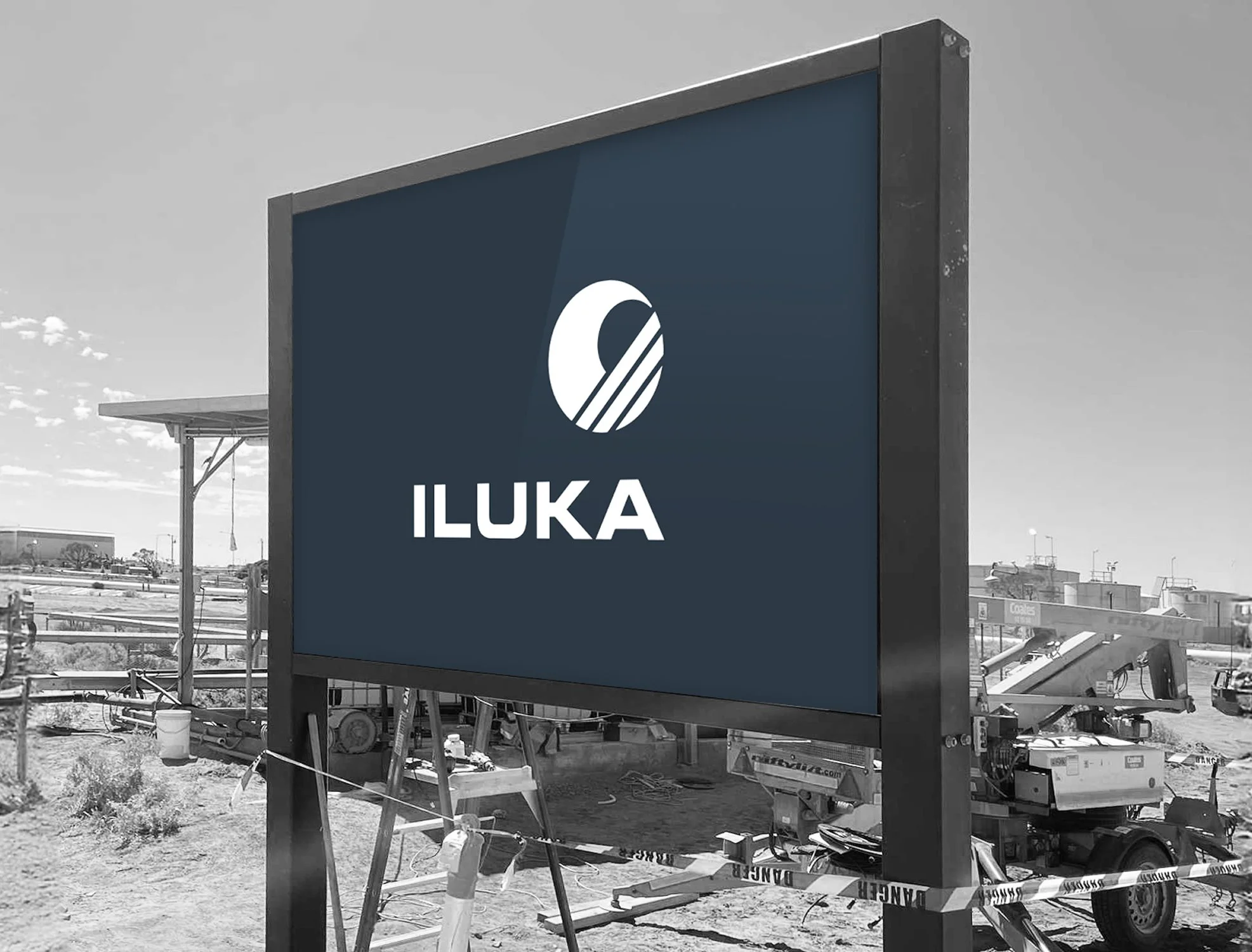
When Iluka Resources needed a display for a remote desert mine site, standard commercial outdoor hardware was not a viable solution. The site required sunlight readability from 50 metres at speed from a truck cab, operation through extreme temperature swings from summer highs to sub-zero winter nights, sealed ingress protection against fine mineral dust, and delivery within 12 weeks.
PinnacleLED designed and manufactured the custom structural frame and protective enclosure in Perth. The system was pre-configured and fully tested before dispatch, removing the need for extended on-site commissioning at a remote location.
The complete unit was delivered within the 12-week programme without fans or active cooling, managing the site's full temperature range through the design of the enclosure itself. That outcome came from treating the housing as an engineering problem, not as a box to put a screen in.
Request an Engineering Review
Outdoor LED displays in WA require more than an IP65 rating and a brightness figure. UV stability, thermal management, structural compliance, and ingress specification for the specific site environment are all components of a complete outdoor brief.
PinnacleLED's outdoor LED range is specified for WA conditions. The engineering team covers structural sign-off, thermal management design, and full compliance documentation from brief to commissioning. Contact us to request an engineering review of your outdoor display project.
